Glen Oaks Ranch

Why it's listed
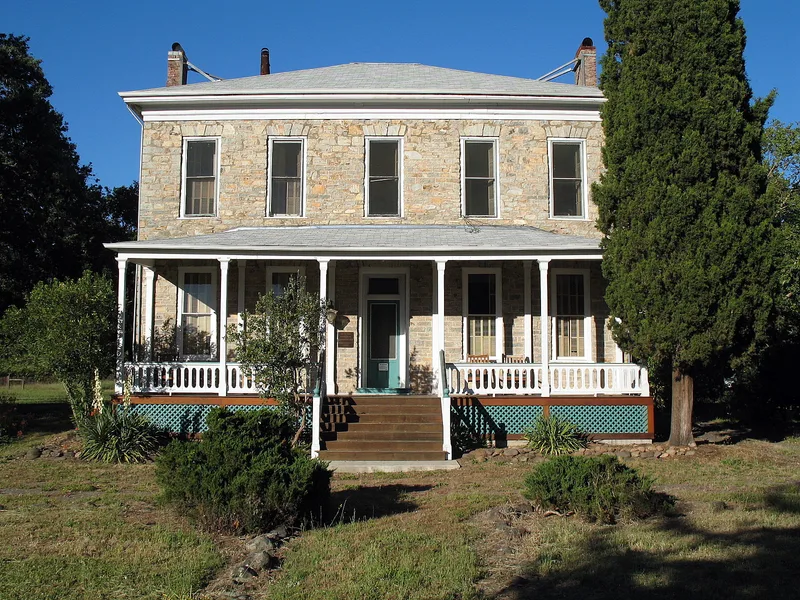
Glen Oaks Ranch is a 143-acre agricultural district at Glen Ellen, in Sonoma County's Valley of the Moon. Its centerpiece is a two-story stone house built in 1870 for Charles V. Stuart, using stone quarried on the property. Nearby are a stone barn, a stone smokehouse, a Craftsman bungalow, a foreman's house from about 1930, a river rock gateway and a wooden bridge on dry stone abutments. The grounds also hold gardens and the ruins of a winery. Stuart planted one of the early non-Mission grape vineyards and employed Chinese workers, whom he defended as a delegate to the 1878 state constitutional convention. After his death in 1880, his widow Ellen Stuart ran the winery for about a decade, and the town of Glen Ellen was named for her. Later owners added farm buildings, orchards and recreational structures. The ranch was listed for its architecture, as the most intact agricultural complex of its kind in the valley, and for its association with the Stuarts.
Machine-generated summary. This summary was generated by a language model from the official nomination document and has not been reviewed line by line by an editor. It may contain errors. Check the source document before relying on any detail. Source: nomination document (PDF) · catalog entry. Generated October 2026 (model claude-sonnet-5-5, prompt v1.0-2026-10-29).
| Period of significance | 1870-ca. 1930 |
|---|---|
| Styles | Italianate; Craftsman; No style |
| Areas of significance | Architecture, Exploration/Settlement, Agriculture, Politics/Government |
| Acreage | 143 |
| Boundary source | NPS cultural-resource GIS polygon |
| Full listing page | Glen Oaks Ranch (property record) |
What listing means for this property
This is a historic district. Buildings within its boundary are either contributing (they add to the district's significance) or non-contributing. Owners of contributing income-producing buildings can claim the 20% federal rehabilitation tax credit; homeowners should look at state credits. National Register districts impose no design review by themselves; a local historic district ordinance, if one exists, does (the difference explained).
General information, not legal or tax advice. Rules change; confirm with your State Historic Preservation Office or a qualified adviser.