Gilman Ranch

Why it's listed
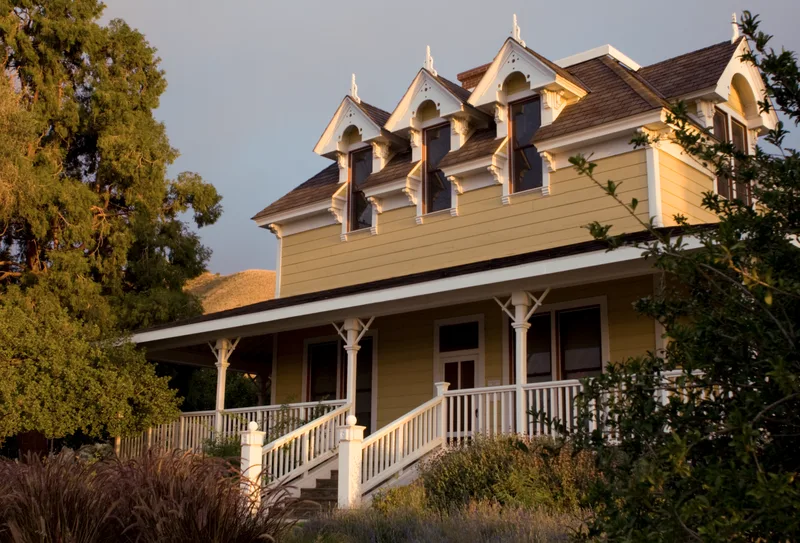
Gilman Ranch in Banning, California, began in 1879 when James Marshall Gilman started building a board-and-batten cottage beside a natural spring. Around 1883 a larger Victorian front section was added, and a bungalow-style porch followed about 1922. The ranch once covered more than 500 acres producing grain, nuts, fruit, horses, pigs and cattle. Today the house, part of a long shed, an adobe milkhouse, a cement-walled barn and remnant olive and citrus orchards survive on about 126 acres. The site was an Indian village location and lay beside the Bradshaw Road, where Gilman kept a stage stop and general store. Gilman also served on the first Banning city council. His son Marshall French Gilman became a mayor, newspaper editor and horticultural expert. The ranch was also the scene of the 1909 killing that set off the Willie Boy manhunt. The house is described as the best Victorian ranch house in the San Gorgonio Pass area.
Machine-generated summary. This summary was generated by a language model from the official nomination document and has not been reviewed line by line by an editor. It may contain errors. Check the source document before relying on any detail. Source: nomination document (PDF) · catalog entry. Generated October 2026 (model claude-sonnet-5-5, prompt v1.0-2026-10-29).
| Period of significance | 1879- |
|---|---|
| Styles | Victorian ranch house (California Victorian, with a circa 1922 bungalow-style porch) |
| Areas of significance | Prehistoric, Historic - Aboriginal, Agriculture, Transportation, Exploration/Settlement |
| Acreage | 126 |
| Boundary source | NPS cultural-resource GIS polygon |
| Full listing page | Gilman Ranch (property record) |
What listing means for this property
This is a historic district. Buildings within its boundary are either contributing (they add to the district's significance) or non-contributing. Owners of contributing income-producing buildings can claim the 20% federal rehabilitation tax credit; homeowners should look at state credits. National Register districts impose no design review by themselves; a local historic district ordinance, if one exists, does (the difference explained).
General information, not legal or tax advice. Rules change; confirm with your State Historic Preservation Office or a qualified adviser.