Gasquet Ranger Station Historic District

The National Park Service has not published a boundary polygon for this district; the map shows the listed properties inside it and the district's reference point.
Why it's listed
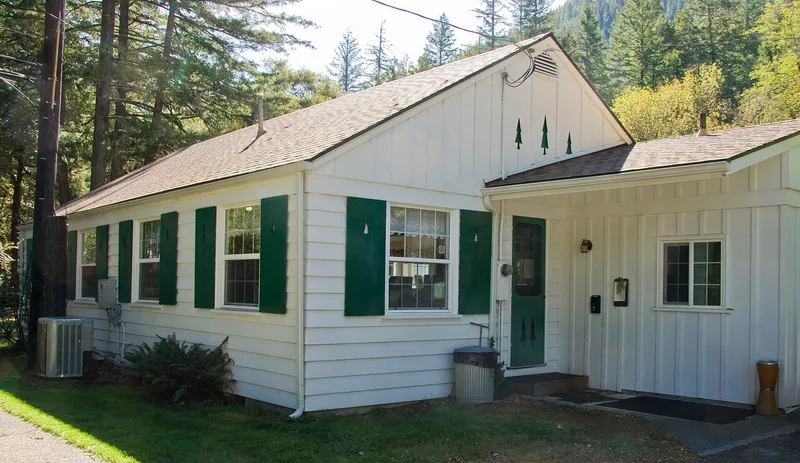
Gasquet Ranger Station is a three-acre compound on a river terrace between U.S. Highway 199 and the Middle Fork of the Smith River in Del Norte County. The Civilian Conservation Corps and the U.S. Forest Service built it between 1933 and 1939, starting with a new station after the earlier Smith Fork Ranger Station was judged inadequate. Eight contributing elements remain: a main office, an assistant district ranger's residence, two garages, a warehouse, a gas and oil house, a Colonial Revival ranger's residence, and a low mortarless river-rock wall. Most buildings follow the Forest Service rustic style, with horizontal lines, wood construction and pine tree cut-outs in shutters and gables, a motif from the Pacific Northwest region that administered the district until 1947. The district was listed for its link to the CCC and New Deal conservation work, and as a well-preserved Depression-era ranger station plan. Later additions from the 1960s and 1970s do not contribute to its historic character.
Machine-generated summary. This summary was generated by a language model from the official nomination document and has not been reviewed line by line by an editor. It may contain errors. Check the source document before relying on any detail. Source: nomination document (PDF) · catalog entry. Generated October 2026 (model claude-sonnet-5-5, prompt v1.0-2026-10-29).
| Period of significance | 1933-1942 |
|---|---|
| Styles | Forest Service Rustic (one building in Colonial Revival style) |
| Areas of significance | Politics/Government, Conservation, Architecture |
| Acreage | 3 |
| Boundary source | not published |
| Full listing page | Gasquet Ranger Station Historic District (property record) |
What listing means for this property
This is a historic district. Buildings within its boundary are either contributing (they add to the district's significance) or non-contributing. Owners of contributing income-producing buildings can claim the 20% federal rehabilitation tax credit; homeowners should look at state credits. National Register districts impose no design review by themselves; a local historic district ordinance, if one exists, does (the difference explained).
General information, not legal or tax advice. Rules change; confirm with your State Historic Preservation Office or a qualified adviser.