French Gulch Historic District

Why it's listed
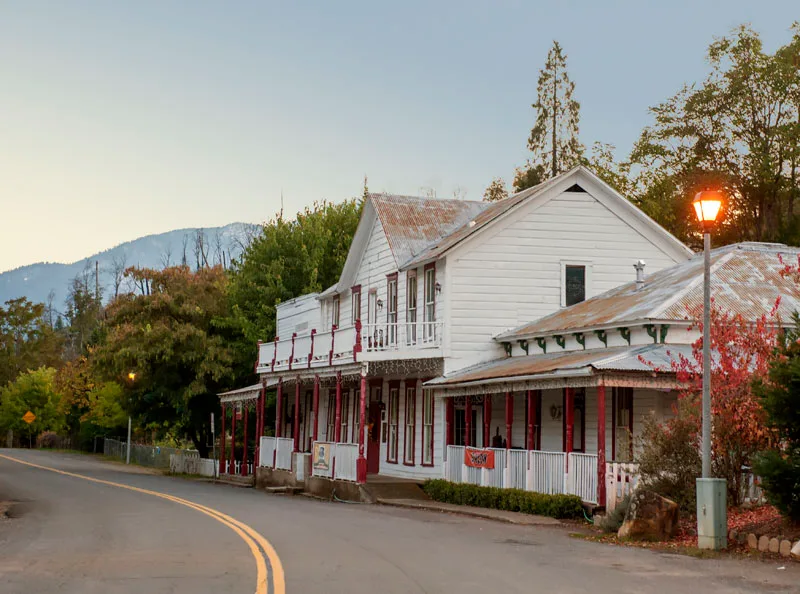
French Gulch is a former gold mining town in Shasta County, California, set in a narrow canyon between a hill and Clear Creek. Almost all buildings face a single main street, once the Shasta and Yreka Turnpike Road, with large yards, white picket fences and an irrigation ditch alongside. Placer mining scars remain above and below town. Founded in 1852 and named for French miners, the town grew from gold discoveries in 1849 and served as a major stage stop between Sacramento and Portland from 1859 to 1868. Surviving buildings include Franck's Store, opened in 1854 and rebuilt in stone in 1867, the 1887 hotel, the Odd Fellows hall, a Catholic church from about 1900 and the 1856 Gartland cabin, the oldest remaining structure. Nearby mines, such as the Milkmaid, Franklin and Brown Bear, produced millions of dollars in gold. The district was listed for its mining history and its well-preserved town character.
Machine-generated summary. This summary was generated by a language model from the official nomination document and has not been reviewed line by line by an editor. It may contain errors. Check the source document before relying on any detail. Source: nomination document (PDF) · catalog entry. Generated October 2026 (model claude-sonnet-5-5, prompt v1.0-2026-10-29).
| Period of significance | 19th Century |
|---|---|
| Areas of significance | Industry, Social History |
| Acreage | 180 |
| Boundary source | NPS cultural-resource GIS polygon |
| Full listing page | French Gulch Historic District (property record) |
What listing means for this property
This is a historic district. Buildings within its boundary are either contributing (they add to the district's significance) or non-contributing. Owners of contributing income-producing buildings can claim the 20% federal rehabilitation tax credit; homeowners should look at state credits. National Register districts impose no design review by themselves; a local historic district ordinance, if one exists, does (the difference explained).
General information, not legal or tax advice. Rules change; confirm with your State Historic Preservation Office or a qualified adviser.