Ford Place Historic District

Why it's listed
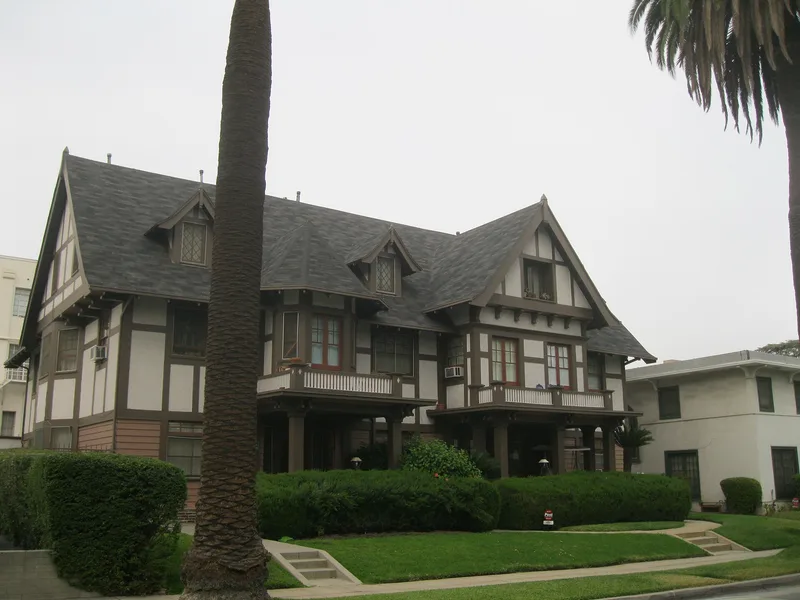
Ford Place is a planned residential neighborhood in Pasadena, laid out in 1902 by developer W.J. Pierce as an upscale "showplace" close to the city center. Pierce graded the lots, built streets and curbs, and planted alternating Canary Island Date Palms and Japanese Fan Palms. Deep lots, wide setbacks and a 74-foot street kept mountain views open between the houses. Ornamental stone gateposts once marked the entrances but have been removed. Ten contributing buildings remain, most built between 1903 and 1906 and the rest by 1916. They include Craftsman, Shingle, Prairie and revival-style houses by architects such as C.W. Buchanan, Charles F. Driscoll and Chicago architect George W. Maher, whose Blinn House is one of two known West Coast examples of his work. The street became part of the Fuller Seminary campus in 1953, and the houses now serve as offices and student housing. The district is recognized for its central location, short development period and influence on later upscale subdivisions in Pasadena.
Machine-generated summary. This summary was generated by a language model from the official nomination document and has not been reviewed line by line by an editor. It may contain errors. Check the source document before relying on any detail. Source: nomination document (PDF) · catalog entry. Generated October 2026 (model claude-sonnet-5-5, prompt v1.0-2026-10-29).
| Styles | Late 19th and 20th Century Revivals (Craftsman, Shingle, Prairie, Tudor Revival, Mission Revival, Mediterranean Revival) |
|---|---|
| Areas of significance | Architecture, Social History |
| Acreage | 7 |
| Boundary source | NPS cultural-resource GIS polygon |
| Full listing page | Ford Place Historic District (property record) |
What listing means for this property
This is a historic district. Buildings within its boundary are either contributing (they add to the district's significance) or non-contributing. Owners of contributing income-producing buildings can claim the 20% federal rehabilitation tax credit; homeowners should look at state credits. National Register districts impose no design review by themselves; a local historic district ordinance, if one exists, does (the difference explained).
General information, not legal or tax advice. Rules change; confirm with your State Historic Preservation Office or a qualified adviser.