Ford Motor Company Assembly Plant

Why it's listed
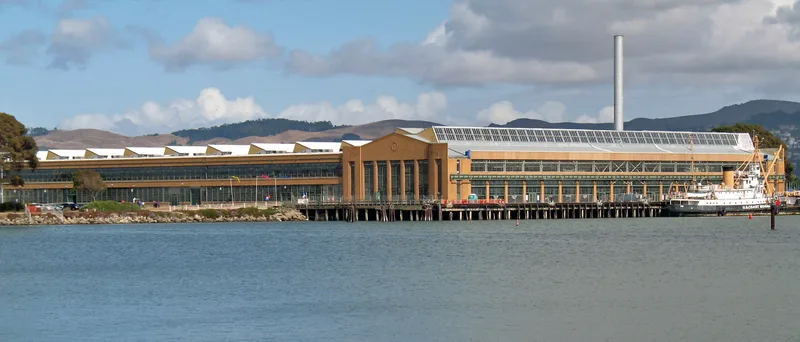
Built on reclaimed bayfront land beside the Santa Fe Channel in Richmond, California, this Ford assembly plant was designed by Albert Kahn and dedicated in 1931. The main building holds about 496,000 square feet under one roof, with a two-story section, a single-story section, a craneway, a boiler house and a rail shed canopy. Steel windows and sawtooth skylights light the interior, and the craneway extends onto a pile-supported dock where finished vehicles could be loaded onto ships or trains. A detached oil house also contributes. The plant was the largest Ford assembly facility on the West Coast and the only Kahn-designed building in the Bay Area. During the Depression it supplied Ford vehicles across the western states and supported a large local payroll. In 1942 it became a tank depot that processed military vehicles for shipment overseas. Car assembly ended in 1953 and the plant closed in the mid-1950s. A later warehouse, guard house and tugboat building do not contribute.
Machine-generated summary. This summary was generated by a language model from the official nomination document and has not been reviewed line by line by an editor. It may contain errors. Check the source document before relying on any detail. Source: nomination document (PDF) · catalog entry. Generated October 2026 (model claude-sonnet-5-5, prompt v1.0-2026-10-29).
| Period of significance | 1930 - 1938 |
|---|---|
| Styles | Other: Industrial |
| Areas of significance | Industry, Commerce, Transportation, Architecture |
| Acreage | 30 |
| Boundary source | NPS cultural-resource GIS polygon |
| Full listing page | Ford Motor Company Assembly Plant (property record) |
What listing means for this property
This is a historic district. Buildings within its boundary are either contributing (they add to the district's significance) or non-contributing. Owners of contributing income-producing buildings can claim the 20% federal rehabilitation tax credit; homeowners should look at state credits. National Register districts impose no design review by themselves; a local historic district ordinance, if one exists, does (the difference explained).
General information, not legal or tax advice. Rules change; confirm with your State Historic Preservation Office or a qualified adviser.