Farnsworth, Gen. Charles S., County Park

The National Park Service has not published a boundary polygon for this district; the map shows the listed properties inside it and the district's reference point.
Why it's listed
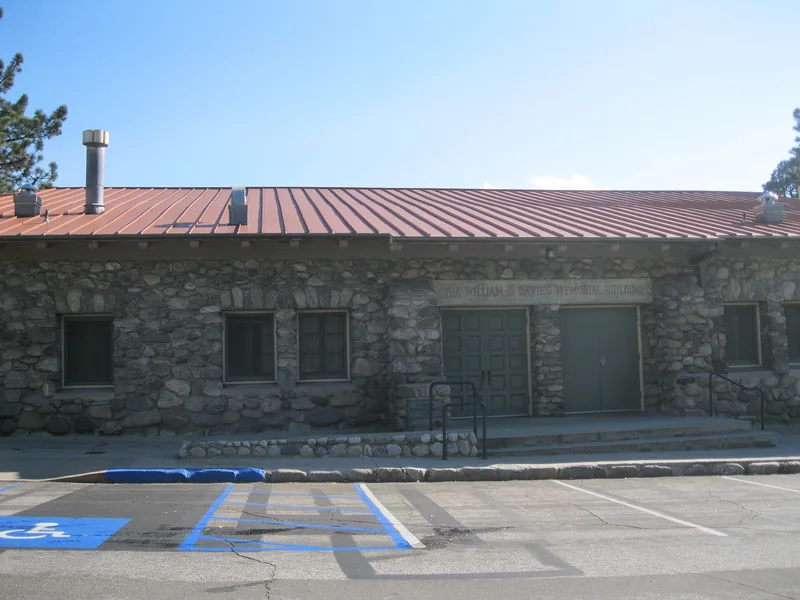
Farnsworth Park occupies 8.5 acres on the Altadena hillside below the San Gabriel Mountains, on a site once used by Los Angeles County as a reforestation and ornamental tree nursery. Community leaders, led by General Charles S. Farnsworth, pushed for a park there in the early 1930s, and it was built between 1933 and 1938 with labor from the CWA, WPA and the Civilian Conservation Corps. Its centerpiece is a two-story recreation building of native arroyo granite and wood shingles, designed by Charles H. Kyson in 1934 and later renamed the William D. Davies Memorial Building. Below it is a 500-seat amphitheater built in 1938. Stone walls, barbecues, pergolas, tennis courts, a baseball diamond and a ranger's cottage complete the layout. For an unincorporated community with few public spaces, the park became the main venue for theater, dances, festivals and recreation, and it retains its original plan and character.
Machine-generated summary. This summary was generated by a language model from the official nomination document and has not been reviewed line by line by an editor. It may contain errors. Check the source document before relying on any detail. Source: nomination document (PDF) · catalog entry. Generated October 2026 (model claude-sonnet-5-5, prompt v1.0-2026-10-29).
| Period of significance | 1933-1946 |
|---|---|
| Styles | Other: rustic |
| Areas of significance | Entertainment/Recreation, Social History, Architecture |
| Acreage | 8.5 |
| Boundary source | not published |
| Full listing page | Farnsworth, Gen. Charles S., County Park (property record) |
What listing means for this property
This is a historic district. Buildings within its boundary are either contributing (they add to the district's significance) or non-contributing. Owners of contributing income-producing buildings can claim the 20% federal rehabilitation tax credit; homeowners should look at state credits. National Register districts impose no design review by themselves; a local historic district ordinance, if one exists, does (the difference explained).
General information, not legal or tax advice. Rules change; confirm with your State Historic Preservation Office or a qualified adviser.