Elk Grove Historic District

Why it's listed
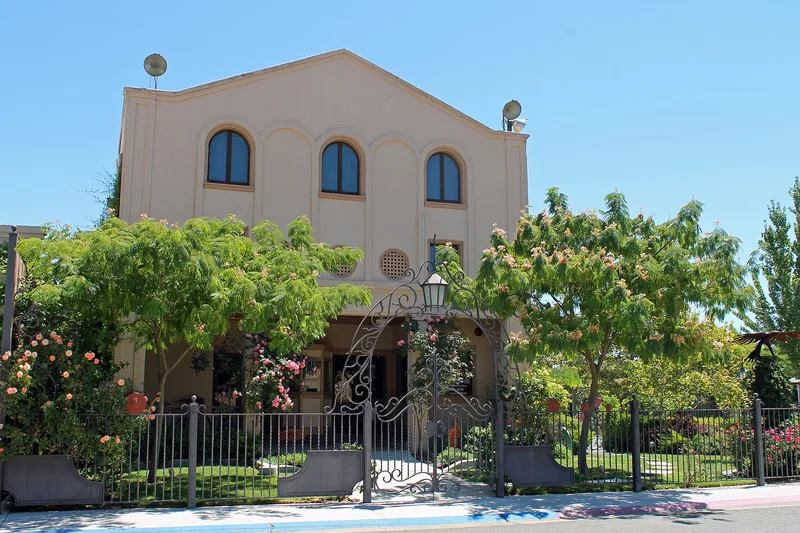
Old Town Elk Grove is a historic district of 49 contributing and 19 non-contributing buildings, plus three vacant parcels, arranged along Elk Grove Boulevard on both sides of the Southern Pacific tracks. It also takes in residential blocks on School, Gage and Grove Streets. Most buildings were put up between 1870 and 1930, when the Central Pacific and later the Southern Pacific railroads dominated the local economy. The streetscape mixes one and two story commercial and residential buildings, including false front stores, Italianate and classically detailed facades, utilitarian brick buildings and bungalows. Notable examples include the 1876 Elk Grove Hotel, the Odd Fellows hall built after an 1892 fire, the 1880 Masonic Lodge, and a brick building on the Toronto Hotel site rebuilt after fires in 1892 and 1922. Later concrete block and metal buildings intrude, yet the area keeps a traditional Mainstreet look that sets it apart from the surrounding suburban community.
Machine-generated summary. This summary was generated by a language model from the official nomination document and has not been reviewed line by line by an editor. It may contain errors. Check the source document before relying on any detail. Source: nomination document (PDF) · catalog entry. Generated October 2026 (model claude-sonnet-5-5, prompt v1.0-2026-10-29).
| Styles | Simple late 19th century false front, Italianate and classically detailed facades, simple utilitarian commercial styles, and bungaloid structures |
|---|---|
| Areas of significance | Transportation, Exploration/Settlement, Architecture |
| Acreage | 15 |
| Boundary source | NPS cultural-resource GIS polygon |
| Full listing page | Elk Grove Historic District (property record) |
What listing means for this property
This is a historic district. Buildings within its boundary are either contributing (they add to the district's significance) or non-contributing. Owners of contributing income-producing buildings can claim the 20% federal rehabilitation tax credit; homeowners should look at state credits. National Register districts impose no design review by themselves; a local historic district ordinance, if one exists, does (the difference explained).
General information, not legal or tax advice. Rules change; confirm with your State Historic Preservation Office or a qualified adviser.