East Brother Island Light Station

The National Park Service has not published a boundary polygon for this district; the map shows the listed properties inside it and the district's reference point.
Why it's listed
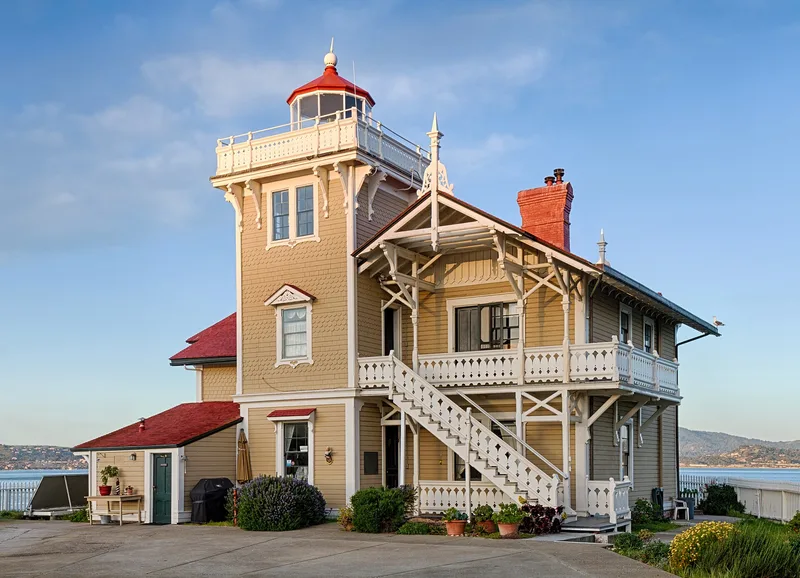
East Brother Island Light Station is a compact group of white wooden Victorian buildings on a small rocky island at the meeting of San Francisco and San Pablo Bays. Built in 1873-74 after the top of the rock was blasted flat, it includes a turreted light tower with living quarters, a boat-house and engine room, a shop and storage building, a water tank, a domed cistern and a landing dock, all inside a white picket fence. The light first shone on March 1, 1874, and a steam fog signal began on May 1. Keepers and later Coast Guardsmen kept it running almost continuously until automation in 1969. Captain John Stenmark raised a family there for twenty years from 1894. The nomination values the station as a fine example of modest "Carpenters Gothic" design and as one of the last family-style lighthouse stations on the Bay. It was nominated while the buildings faced demolition.
Machine-generated summary. This summary was generated by a language model from the official nomination document and has not been reviewed line by line by an editor. It may contain errors. Check the source document before relying on any detail. Source: nomination document (PDF) · catalog entry. Generated October 2026 (model claude-sonnet-5-5, prompt v1.0-2026-10-29).
| Period of significance | 19th Century (built 1873-4) |
|---|---|
| Styles | Victorian "Carpenters Gothic" |
| Areas of significance | Architecture, Maritime History |
| Acreage | 0.7 |
| Boundary source | not published |
| Full listing page | East Brother Island Light Station (property record) |
What listing means for this property
This is a historic district. Buildings within its boundary are either contributing (they add to the district's significance) or non-contributing. Owners of contributing income-producing buildings can claim the 20% federal rehabilitation tax credit; homeowners should look at state credits. National Register districts impose no design review by themselves; a local historic district ordinance, if one exists, does (the difference explained).
Noted as vacant in the nomination. Nomination documents can be decades old; current status may differ. If you are considering buying an empty listed property, read the due-diligence checklist.
General information, not legal or tax advice. Rules change; confirm with your State Historic Preservation Office or a qualified adviser.