Dutch Flat Historic District

Why it's listed
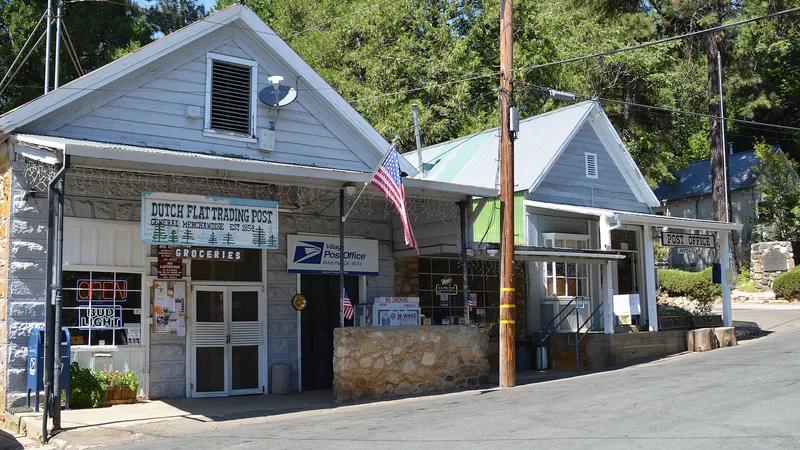
Dutch Flat, in Placer County, California, is preserved as a historic district of about 48 acres around Main and Stockton Streets. Founded in 1851, the town became a center of hydraulic mining between 1854 and 1882. Its surviving buildings include the 1852 hotel, an 1854 general store built of locally quarried tufa, the 1856 Masonic hall, the 1858 Odd Fellows lodge, a Methodist-Episcopal church finished in 1861, and an 1898 schoolhouse that replaced an earlier one and now serves as a community center. A single adobe building is the last remnant of the original Chinatown, once home to about 2,000 residents. Forty-five private homes built before 1900 remain on their original sites, nearly unaltered. The district was recognized for its largely unspoiled Gold Rush architecture and for its role in transportation history: the Dutch Flat-Donner Lake freight route, the Pony Express route, and Theodore Judah's work on the Central Pacific Railroad.
Machine-generated summary. This summary was generated by a language model from the official nomination document and has not been reviewed line by line by an editor. It may contain errors. Check the source document before relying on any detail. Source: nomination document (PDF) · catalog entry. Generated October 2026 (model claude-sonnet-5-5, prompt v1.0-2026-10-29).
| Period of significance | 19th Century |
|---|---|
| Styles | Gold Rush architecture |
| Areas of significance | Transportation, Architecture, Social History |
| Acreage | 48 |
| Boundary source | NPS cultural-resource GIS polygon |
| Full listing page | Dutch Flat Historic District (property record) |
What listing means for this property
This is a historic district. Buildings within its boundary are either contributing (they add to the district's significance) or non-contributing. Owners of contributing income-producing buildings can claim the 20% federal rehabilitation tax credit; homeowners should look at state credits. National Register districts impose no design review by themselves; a local historic district ordinance, if one exists, does (the difference explained).
General information, not legal or tax advice. Rules change; confirm with your State Historic Preservation Office or a qualified adviser.