Drakesbad Guest Ranch

Why it's listed
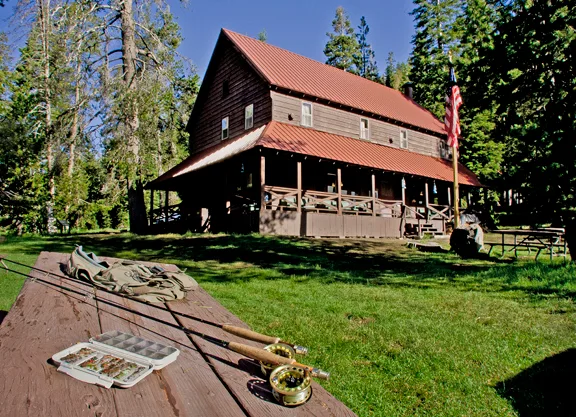
Drakesbad Guest Ranch is a summer resort in the Hot Springs Creek valley, inside Lassen Volcanic National Park in Plumas County, California. Edward Drake homesteaded the land and began a small hotel and bathhouse, and in 1900 Alex and Ida Sifford bought the property. The family expanded it into a full guest ranch, adding a plunge bath, tent cabins that were later partly replaced by frame cottages and duplexes, a kitchen and dining hall, a hay barn and a string of saddle horses. They drained and improved the wet ground into a meadow, built trails to thermal areas such as Devil's Kitchen and Boiling Springs Lake, and created Dream Lake for fishing. The district covers 440 acres and is described as a vernacular landscape. Its layout, land use, circulation routes and natural setting remain largely unchanged, and the ranch continues to host guests, which supports its listing as a historic district.
Machine-generated summary. This summary was generated by a language model from the official nomination document and has not been reviewed line by line by an editor. It may contain errors. Check the source document before relying on any detail. Source: nomination document (PDF) · catalog entry. Generated October 2026 (model claude-sonnet-5-5, prompt v1.0-2026-10-29).
| Styles | Other: vernacular |
|---|---|
| Areas of significance | Entertainment/Recreation, Conservation |
| Acreage | 440 |
| Boundary source | NPS cultural-resource GIS polygon |
| Full listing page | Drakesbad Guest Ranch (property record) |
What listing means for this property
This is a historic district. Buildings within its boundary are either contributing (they add to the district's significance) or non-contributing. Owners of contributing income-producing buildings can claim the 20% federal rehabilitation tax credit; homeowners should look at state credits. National Register districts impose no design review by themselves; a local historic district ordinance, if one exists, does (the difference explained).
General information, not legal or tax advice. Rules change; confirm with your State Historic Preservation Office or a qualified adviser.