Deetjen's Big Sur Inn

The National Park Service has not published a boundary polygon for this district; the map shows the listed properties inside it and the district's reference point.
Why it's listed
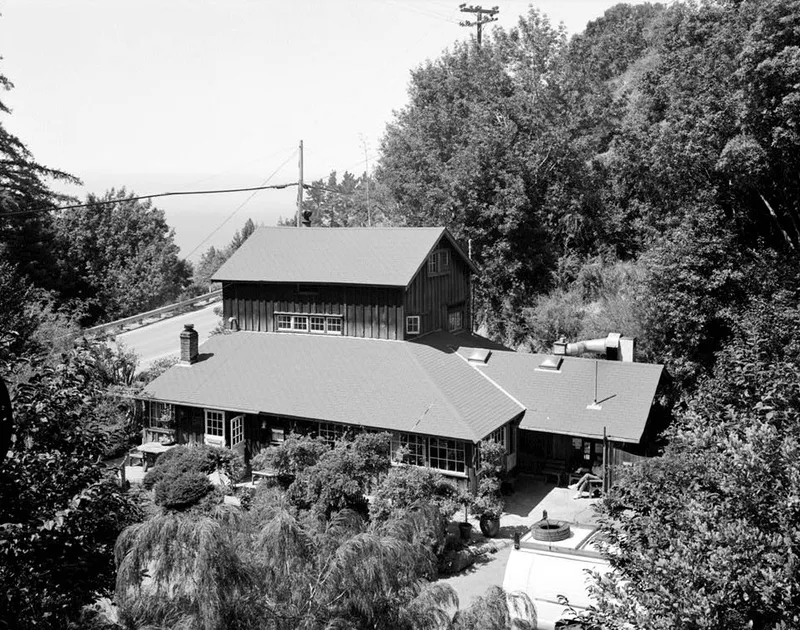
Deetjen's Big Sur Inn is a cluster of rustic redwood buildings tucked into Castro Creek Canyon beside Highway 1 in Big Sur. Norwegian-born craftsman Helmuth Deetjen began it in 1936 with a barn for his goats, then added a residence, guest rooms and a dining room as travelers discovered the coast after the Carmel-San Simeon Highway opened. The five original buildings, finished by 1941, use post-and-beam redwood framing, vertical board-and-batten siding, native stone retaining walls and hand-carved railings and doors. Deetjen designed and supervised the work, drawing on the wooden vacation-house tradition of Norway, and used salvaged lumber and second-hand windows. The inn became a gathering place for local writers and artists. It is recognized as one of the earliest lodging and dining facilities serving Big Sur's growing tourist trade, and its buildings keep a strong sense of their original setting and craftsmanship. Later buildings on the south side of the canyon lie outside the historic boundary, and the inn still operates as an inn and restaurant.
Machine-generated summary. This summary was generated by a language model from the official nomination document and has not been reviewed line by line by an editor. It may contain errors. Check the source document before relying on any detail. Source: nomination document (PDF) · catalog entry. Generated October 2026 (model claude-sonnet-5-5, prompt v1.0-2026-10-29).
| Period of significance | 1936-1941 |
|---|---|
| Styles | Other: Norwegian Rustic Architecture |
| Areas of significance | Entertainment/Recreation |
| Acreage | 4 |
| Boundary source | not published |
| Full listing page | Deetjen's Big Sur Inn (property record) |
What listing means for this property
This is a historic district. Buildings within its boundary are either contributing (they add to the district's significance) or non-contributing. Owners of contributing income-producing buildings can claim the 20% federal rehabilitation tax credit; homeowners should look at state credits. National Register districts impose no design review by themselves; a local historic district ordinance, if one exists, does (the difference explained).
General information, not legal or tax advice. Rules change; confirm with your State Historic Preservation Office or a qualified adviser.