Death Valley Junction Historic District

Why it's listed
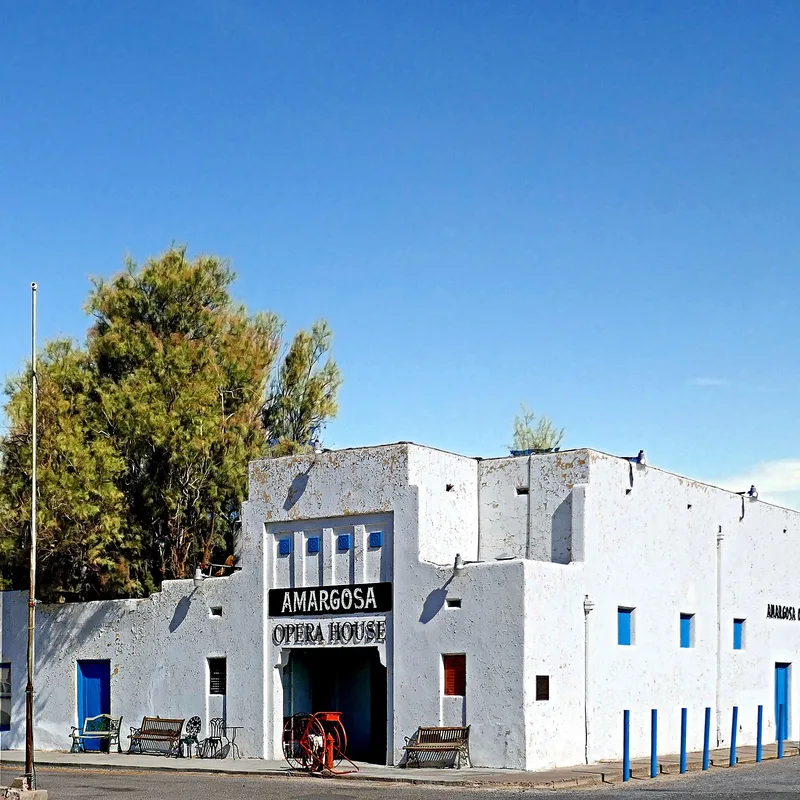
Death Valley Junction is a planned company settlement in the Mojave Desert, built by the Pacific Coast Borax Company from 1923 to 1925 to house its operations, visitors and employees. Los Angeles architect Alexander Hamilton McCulloch designed sixteen of the major buildings in a simplified Spanish Colonial style, using adobe walls, flat roofs and crisp, simple openings. Most are low buildings grouped around a large plaza and linked by a continuous adobe wall. The complex includes a hotel, dormitories, a store block with post office, a recreation hall, a two-storey superintendent's residence and rows of cottages. Two corner towers mark the entry to the plaza. The settlement grew from the borax trade, which relied on the Tonopah & Tidewater Railroad. When mining shifted elsewhere, the company converted part of the dormitory complex into a hotel in 1932. The district is valued for its adobe construction, its formal layout and its role in the borax industry. The recreation hall later became the Amargosa Opera House.
Machine-generated summary. This summary was generated by a language model from the official nomination document and has not been reviewed line by line by an editor. It may contain errors. Check the source document before relying on any detail. Source: nomination document (PDF) · catalog entry. Generated October 2026 (model claude-sonnet-5-5, prompt v1.0-2026-10-29).
| Period of significance | 1923-1926 |
|---|---|
| Styles | Simplified Spanish Colonial (Mission/Spanish Colonial Revival) |
| Areas of significance | Industry, Community Planning and Development, Commerce, Transportation, Exploration/Settlement, Architecture, Performing Arts |
| Acreage | 11.9 |
| Boundary source | NPS cultural-resource GIS polygon |
| Full listing page | Death Valley Junction Historic District (property record) |
What listing means for this property
This is a historic district. Buildings within its boundary are either contributing (they add to the district's significance) or non-contributing. Owners of contributing income-producing buildings can claim the 20% federal rehabilitation tax credit; homeowners should look at state credits. National Register districts impose no design review by themselves; a local historic district ordinance, if one exists, does (the difference explained).
General information, not legal or tax advice. Rules change; confirm with your State Historic Preservation Office or a qualified adviser.