De Sabla, Eugene J., Jr., Teahouse and Tea Garden

The National Park Service has not published a boundary polygon for this district; the map shows the listed properties inside it and the district's reference point.
Why it's listed
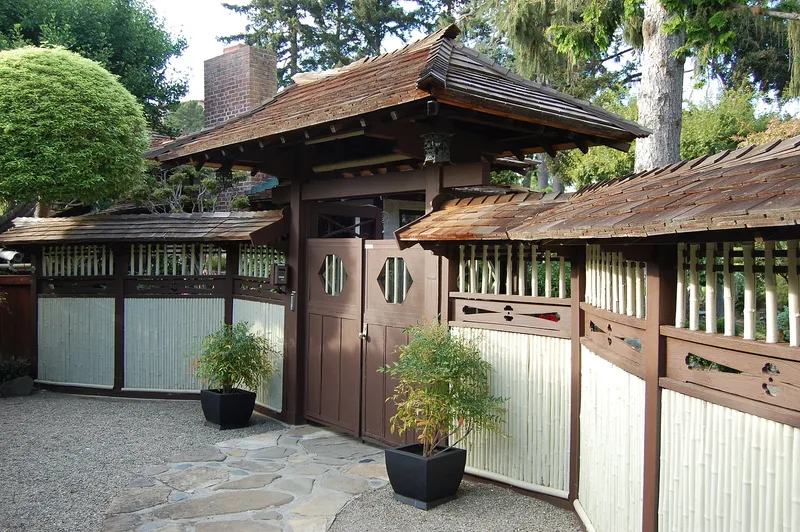
On a one-acre lot in San Mateo, a Japanese-style teahouse and tea garden survive from the El Cerrito estate of industrialist Eugene de Sabla Jr., a co-founder of Pacific Gas and Electric. The garden, laid out around 1906-1907, follows a published hill-garden plan and is attributed to Makota Hagiwara, chief gardener of the Japanese Tea Garden in Golden Gate Park. It has waterfalls, stone lanterns, a stone Buddha, a bridge, and a bamboo fence with a roofed gate. The shingle-roofed teahouse, built between 1907 and 1909, has a tokonoma and veranda. Additions in 1947 turned it into a residence while keeping its character. The nomination presents the property as the only surviving private Hagiwara garden and the only private Japanese tea garden left from the many on San Mateo and Hillsborough estates. It also links the property to the early influence of Japanese design on California Arts and Crafts architecture.
Machine-generated summary. This summary was generated by a language model from the official nomination document and has not been reviewed line by line by an editor. It may contain errors. Check the source document before relying on any detail. Source: nomination document (PDF) · catalog entry. Generated October 2026 (model claude-sonnet-5-5, prompt v1.0-2026-10-29).
| Period of significance | 1907-1909 |
|---|---|
| Styles | Late 19th and 20th Century Revivals; Other: Japanese |
| Areas of significance | Landscape Architecture, Asian |
| Acreage | 1 |
| Boundary source | not published |
| Full listing page | De Sabla, Eugene J., Jr., Teahouse and Tea Garden (property record) |
What listing means for this property
This is a historic district. Buildings within its boundary are either contributing (they add to the district's significance) or non-contributing. Owners of contributing income-producing buildings can claim the 20% federal rehabilitation tax credit; homeowners should look at state credits. National Register districts impose no design review by themselves; a local historic district ordinance, if one exists, does (the difference explained).
General information, not legal or tax advice. Rules change; confirm with your State Historic Preservation Office or a qualified adviser.