Crystal Cove Historic District

Why it's listed
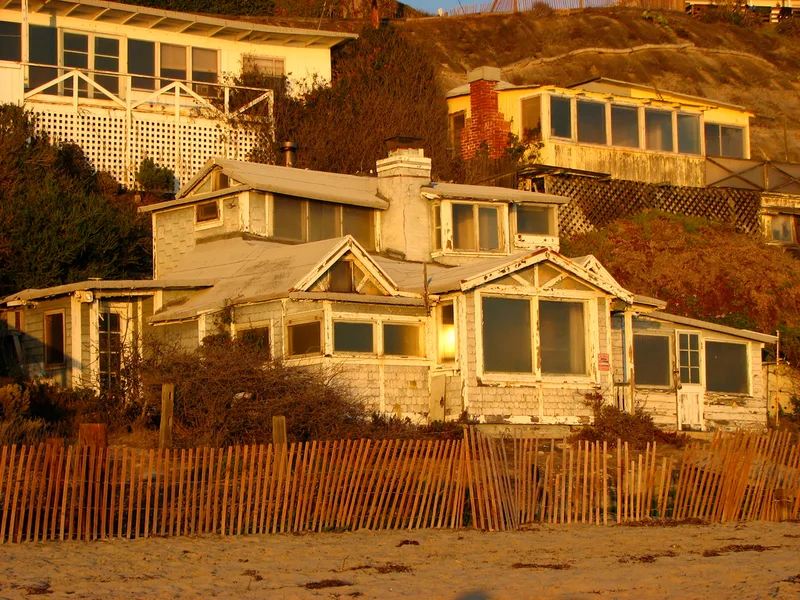
Crystal Cove is a small beach colony of 46 wood-frame cottages tucked into a cove at the mouth of Los Trancos Canyon, on the Pacific shore at Laguna Beach. Most of the buildings began as single-wall cabins built between about 1924 and 1936, some starting from tent frames, and later evolved into cottages with plumbing, gas and electricity. Each was built by its owner to suit personal needs, giving the district the character of architecture without architects. Board-and-batten, shingle and tongue-and-groove siding, sash windows, picket fences and driftwood walkways remain common. The nomination holds that Crystal Cove is significant because it survives intact as the prototype beach colony of the late 1920s and early 1930s, after other coastal communities grew into commercial centers or were altered or demolished. Its setting remains largely undeveloped, and only a few cottages have been remodeled insensitively. The district is also linked to early film-making in California, and two prehistoric archeological sites lie within it.
Machine-generated summary. This summary was generated by a language model from the official nomination document and has not been reviewed line by line by an editor. It may contain errors. Check the source document before relying on any detail. Source: nomination document (PDF) · catalog entry. Generated October 2026 (model claude-sonnet-5-5, prompt v1.0-2026-10-29).
| Styles | Vernacular single-wall board and batten beach cottages ("architecture without architects") |
|---|---|
| Areas of significance | Historic - Aboriginal, Entertainment/Recreation, Exploration/Settlement, Architecture, Performing Arts |
| Acreage | 12.3 |
| Boundary source | NPS cultural-resource GIS polygon |
| Full listing page | Crystal Cove Historic District (property record) |
What listing means for this property
This is a historic district. Buildings within its boundary are either contributing (they add to the district's significance) or non-contributing. Owners of contributing income-producing buildings can claim the 20% federal rehabilitation tax credit; homeowners should look at state credits. National Register districts impose no design review by themselves; a local historic district ordinance, if one exists, does (the difference explained).
General information, not legal or tax advice. Rules change; confirm with your State Historic Preservation Office or a qualified adviser.