Commercial Row-Brickelltown Historic District

Why it's listed
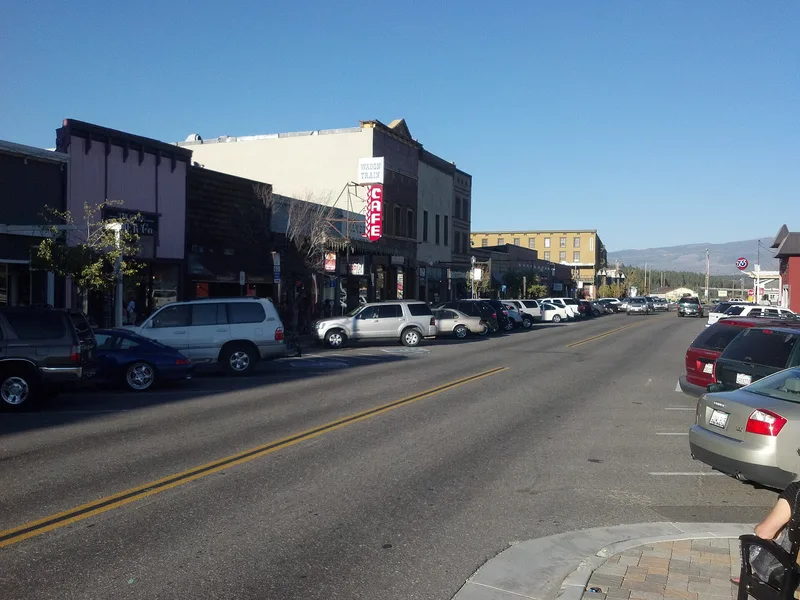
Commercial Row and Brickelltown make up the oldest built area of Truckee, California, running east to west along the Union Pacific tracks and the north side of Donner Pass Road. Of 48 buildings, 32 contribute to the district, dating from 1870 to the late 1920s. Along Commercial Row, brick and stone blocks with flat roofs and connected facades reflect rebuilding after repeated fires, including those of 1868 and 1913. Brickelltown, the town's first residential neighborhood, is characterized by wood-frame houses with steep front gables suited to heavy snow, and porches. Styles include Italianate, Queen Anne, Craftsman and vernacular National Folk. Among the buildings are the 1875 Truckee Jail, now a museum, and the Kruger-White House, listed separately in 1982. The district was recognized for its tie to the railroad and the first transcontinental line, and for the architecture that shows how a western mountain railroad town looked by 1930. Many buildings lack individual distinction but together form a cohesive whole.
Machine-generated summary. This summary was generated by a language model from the official nomination document and has not been reviewed line by line by an editor. It may contain errors. Check the source document before relying on any detail. Source: nomination document (PDF) · catalog entry. Generated October 2026 (model claude-sonnet-5-5, prompt v1.0-2026-10-29).
| Period of significance | 1870-1930 |
|---|---|
| Styles | Late 19th and Early 20th Century American Movements (Brick Block/Utilitarian Commercial, Bungalow/Craftsman, National Folk gable-front, Railroad Depot); Mission/Spanish Colonial Revival; Late Victorian (Queen Anne, Italianate) |
| Areas of significance | Architecture, Community Planning and Development, Transportation, Commerce |
| Acreage | 10 |
| Boundary source | NPS cultural-resource GIS polygon |
| Full listing page | Commercial Row-Brickelltown Historic District (property record) |
What listing means for this property
This is a historic district. Buildings within its boundary are either contributing (they add to the district's significance) or non-contributing. Owners of contributing income-producing buildings can claim the 20% federal rehabilitation tax credit; homeowners should look at state credits. National Register districts impose no design review by themselves; a local historic district ordinance, if one exists, does (the difference explained).
General information, not legal or tax advice. Rules change; confirm with your State Historic Preservation Office or a qualified adviser.