Chichizola Family Store Complex

Why it's listed
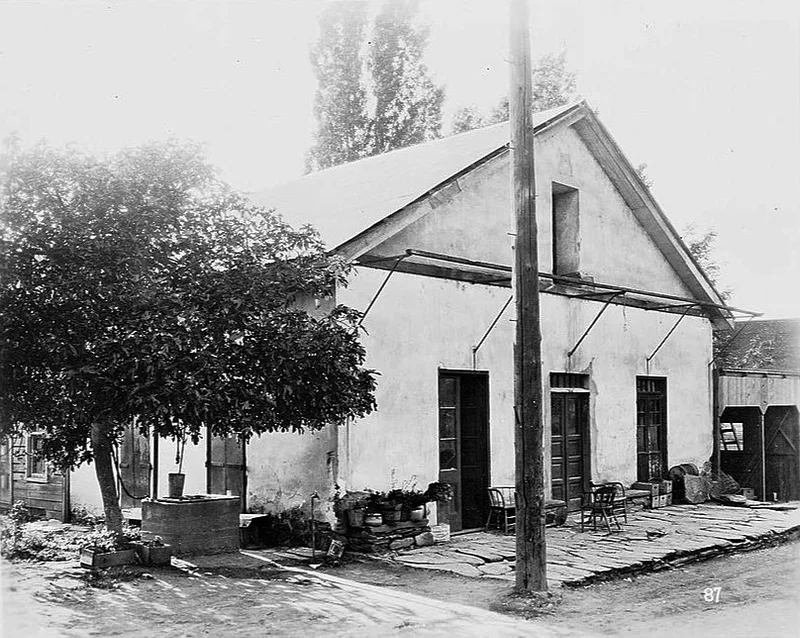
Along Jackson Gate Road, two miles north of Jackson, a 20-acre complex records the growth of a family-run general store that served gold miners. Augustino Chichizola, an Italian native, began trading in 1849 and built a two-foot-thick schist store in 1850. Additions in 1904 and 1912 expanded it, and its interior counters, shelving and ladders remain in place. The district also holds a livestock barn from 1860, a lumber barn from 1875 that stored lumber from the family sawmill, a Queen Anne family home from 1903, a smaller 1911 house with Neo-Classical and Craftsman elements, garages, a hot house, a pigpen, and concrete powder and cap houses from 1905. Most buildings were built for function rather than style. The complex is considered significant for its link to commerce supporting mining in Amador County between 1860 and 1942, and it has changed little since 1942.
Machine-generated summary. This summary was generated by a language model from the official nomination document and has not been reviewed line by line by an editor. It may contain errors. Check the source document before relying on any detail. Source: nomination document (PDF) · catalog entry. Generated October 2026 (model claude-sonnet-5-5, prompt v1.0-2026-10-29).
| Period of significance | 1860-1942 |
|---|---|
| Styles | Late Victorian: Queen Anne; No Style |
| Areas of significance | Commerce |
| Acreage | 20 |
| Boundary source | NPS cultural-resource GIS polygon |
| Full listing page | Chichizola Family Store Complex (property record) |
What listing means for this property
This is a historic district. Buildings within its boundary are either contributing (they add to the district's significance) or non-contributing. Owners of contributing income-producing buildings can claim the 20% federal rehabilitation tax credit; homeowners should look at state credits. National Register districts impose no design review by themselves; a local historic district ordinance, if one exists, does (the difference explained).
General information, not legal or tax advice. Rules change; confirm with your State Historic Preservation Office or a qualified adviser.