California Granite Company

Why it's listed
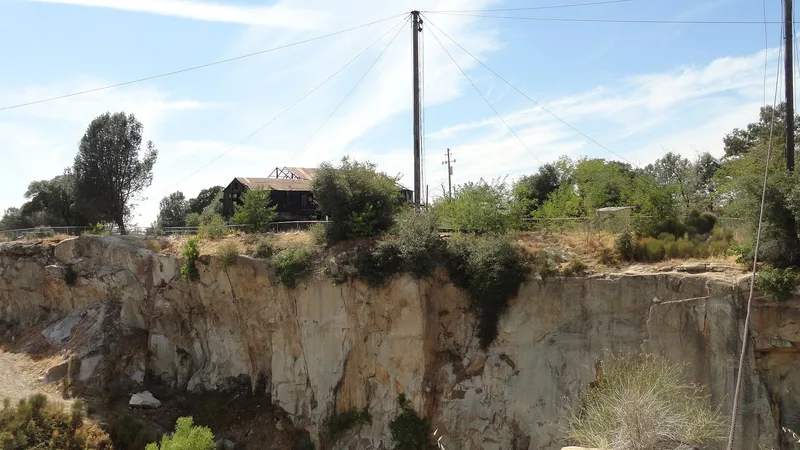
Cut into the ground at 5255 Pacific Street in Rocklin, this 7.2-acre granite quarry operated from 1865 until 2005. The site centers on an open pit 85 feet deep, with a 65-foot wooden derrick, a cutting shed, a monument shed, a small office building, a reciprocating gang saw, an overhead bridge crane and railroad tracks. A wire saw added in 1950 is the one noncontributing piece. Founded as Capitol Granite Company on behalf of the Central Pacific Railroad, it became the largest quarry in a city nicknamed the Granite City, employing as many as 100 workers at its peak. Its stone was used for buildings including the Hibernia Bank and Bank of Italy in San Francisco, the Sacramento County Courthouse and the Pearl Harbor naval station. The quarry was the last working one in Rocklin. The site was listed for its local role in the town's growth and industry between 1865 and 1940, and it still looks much as it did in 1900 photographs.
Machine-generated summary. This summary was generated by a language model from the official nomination document and has not been reviewed line by line by an editor. It may contain errors. Check the source document before relying on any detail. Source: nomination document (PDF) · catalog entry. Generated October 2026 (model claude-sonnet-5-5, prompt v1.0-2026-10-29).
| Period of significance | 1865-1940 |
|---|---|
| Styles | None (industrial, vernacular in design) |
| Areas of significance | Industry |
| Acreage | 7.2 |
| Boundary source | NPS cultural-resource GIS polygon |
| Full listing page | California Granite Company (property record) |
What listing means for this property
This is a historic district. Buildings within its boundary are either contributing (they add to the district's significance) or non-contributing. Owners of contributing income-producing buildings can claim the 20% federal rehabilitation tax credit; homeowners should look at state credits. National Register districts impose no design review by themselves; a local historic district ordinance, if one exists, does (the difference explained).
Noted as vacant in the nomination. Nomination documents can be decades old; current status may differ. If you are considering buying an empty listed property, read the due-diligence checklist.
General information, not legal or tax advice. Rules change; confirm with your State Historic Preservation Office or a qualified adviser.