Bristol-Cypress Historic District

Why it's listed
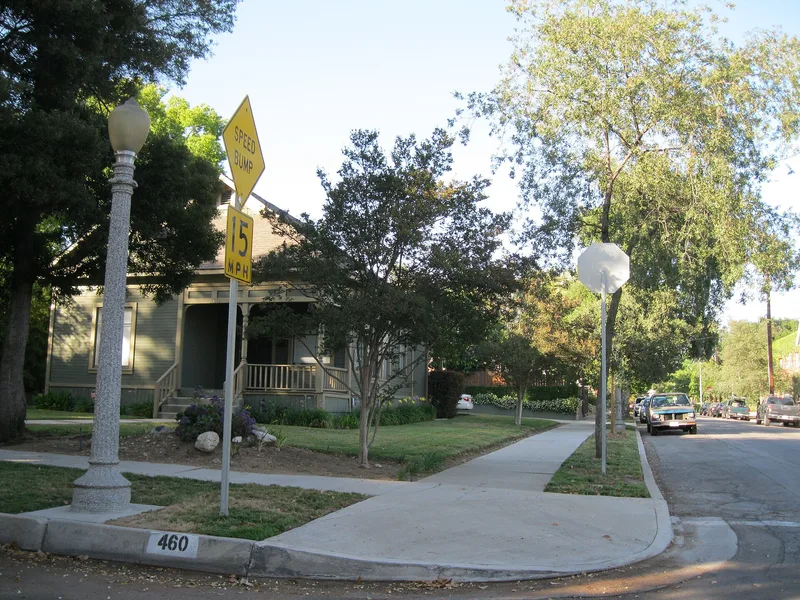
Cypress Avenue in Pasadena holds a compact neighborhood of late 19th and early 20th century houses, listed as a historic district covering about five acres. Thirteen of its buildings contribute to its character, mostly one- and two-story homes in Folk Victorian, Vernacular Hipped Cottage and Vernacular Gabled Cottage forms, plus a Colonial Revival house built in 1896. Dates of construction run from about 1880 to 1905. Typical features include wood drop channel siding, decorative porches, fish-scale shingles and mature oak trees along the street. Larger front yards and heavier landscaping distinguish it from the nearby New Fair Oaks district. The district is significant for its architecture and for its link to the settlement of Pasadena, as it represents the earliest subdivision of San Gabriel Orange Grove Association land by one of the city's founders. Some houses were moved, and several have newer rear garages or second houses, but the street still reads as a late Victorian neighborhood.
Machine-generated summary. This summary was generated by a language model from the official nomination document and has not been reviewed line by line by an editor. It may contain errors. Check the source document before relying on any detail. Source: nomination document (PDF) · catalog entry. Generated October 2026 (model claude-sonnet-5-5, prompt v1.0-2026-10-29).
| Period of significance | 1874-1906 |
|---|---|
| Styles | Late Victorian (Folk Victorian, Vernacular Gabled Cottage, Vernacular Hipped Cottage); Colonial Revival |
| Areas of significance | Architecture, Exploration/Settlement |
| Acreage | 5 |
| Boundary source | NPS cultural-resource GIS polygon |
| Full listing page | Bristol-Cypress Historic District (property record) |
What listing means for this property
This is a historic district. Buildings within its boundary are either contributing (they add to the district's significance) or non-contributing. Owners of contributing income-producing buildings can claim the 20% federal rehabilitation tax credit; homeowners should look at state credits. National Register districts impose no design review by themselves; a local historic district ordinance, if one exists, does (the difference explained).
General information, not legal or tax advice. Rules change; confirm with your State Historic Preservation Office or a qualified adviser.