Benicia Arsenal

Why it's listed
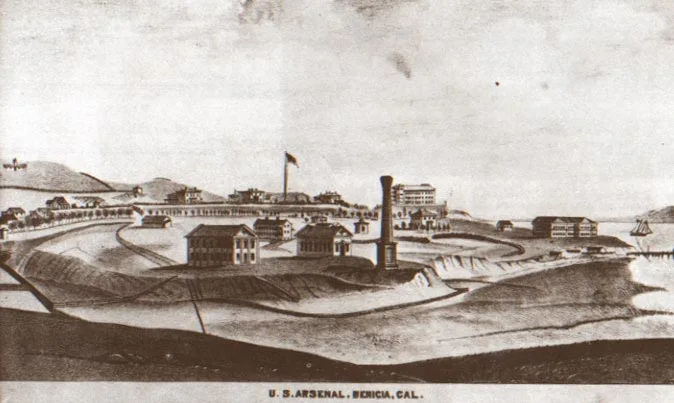
Benicia Arsenal is a former U.S. Army ordnance depot on Army Point, overlooking Carquinez Strait at Benicia, California. The government acquired the land in 1847, troops arrived in 1849, and by 1852 the post served as one of four permanent arsenals and general supply depots on the Pacific Coast. By 1859 seven hand-hewn sandstone buildings stood on the site, among them the Post Hospital, powder magazines, the Camel Barns and a three-story storehouse built as a fortress, later topped by a clock tower. Brick officers' quarters, barracks, a guardhouse and three permanent shops followed in the 1860s through 1880s. The arsenal supplied western troops during the Civil War and equipped National Guardsmen in 1898. It served as a principal supply point for Pacific ordnance in World War II, and its civilian workforce peaked during the Korean conflict. Deactivated in 1963, it was listed as a district of three building clusters plus individual sites, because later intrusions fragmented the original setting.
Machine-generated summary. This summary was generated by a language model from the official nomination document and has not been reviewed line by line by an editor. It may contain errors. Check the source document before relying on any detail. Source: nomination document (PDF) · catalog entry. Generated October 2026 (model claude-sonnet-5-5, prompt v1.0-2026-10-29).
| Styles | Classic Georgian (described for the Commanding Officer's house); otherwise early hand-carved sandstone and brick military buildings |
|---|---|
| Areas of significance | Military, Architecture |
| Acreage | 44 |
| Boundary source | NPS cultural-resource GIS polygon |
| Full listing page | Benicia Arsenal (property record) |
What listing means for this property
This is a historic district. Buildings within its boundary are either contributing (they add to the district's significance) or non-contributing. Owners of contributing income-producing buildings can claim the 20% federal rehabilitation tax credit; homeowners should look at state credits. National Register districts impose no design review by themselves; a local historic district ordinance, if one exists, does (the difference explained).
General information, not legal or tax advice. Rules change; confirm with your State Historic Preservation Office or a qualified adviser.