Bagby Stationhouse, Water Tanks and Turntable

The National Park Service has not published a boundary polygon for this district; the map shows the listed properties inside it and the district's reference point.
Why it's listed
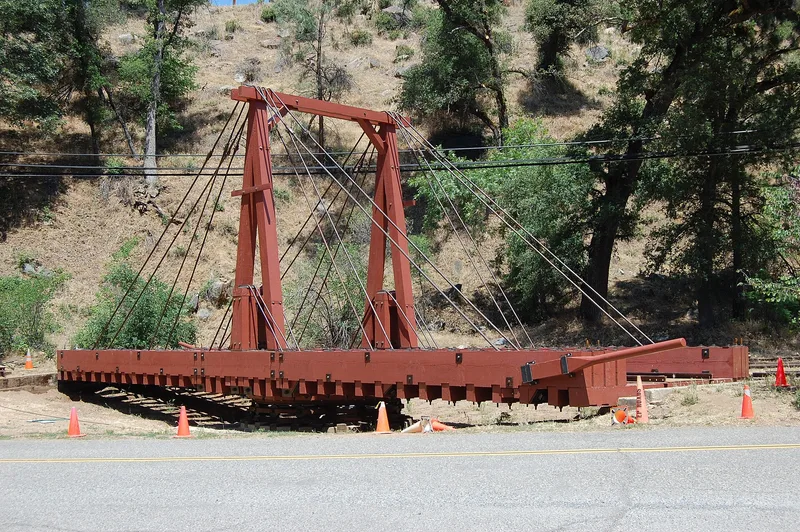
Three surviving pieces of the Yosemite Valley Railroad, a stationhouse, a pair of wooden water tanks and a hand-pushed turntable, now stand at El Portal on the edge of Yosemite National Park. They originally served the railroad at Bagby, in the Merced River canyon, until the rising waters of Lake McClure threatened the site and the structures were moved in 1966. The two-story, shiplap-sided depot dates from 1907 and is the last stationhouse left from a line that carried visitors and freight between Merced and El Portal from 1907 to 1945. The twin gabled tanks differ from the usual single cylindrical-roofed tank. The gallows-frame turntable, built of heavy timbers and iron rods, is a type once common on branch lines and may be the last of its kind in the country. They were listed as the most important surviving reminders of the railroad, even though they no longer stand on their original sites.
Machine-generated summary. This summary was generated by a language model from the official nomination document and has not been reviewed line by line by an editor. It may contain errors. Check the source document before relying on any detail. Source: nomination document (PDF) · catalog entry. Generated October 2026 (model claude-sonnet-5-5, prompt v1.0-2026-10-29).
| Period of significance | 1907 |
|---|---|
| Areas of significance | Transportation |
| Acreage | 0.9 |
| Boundary source | not published |
| Full listing page | Bagby Stationhouse, Water Tanks and Turntable (property record) |
What listing means for this property
This is a historic district. Buildings within its boundary are either contributing (they add to the district's significance) or non-contributing. Owners of contributing income-producing buildings can claim the 20% federal rehabilitation tax credit; homeowners should look at state credits. National Register districts impose no design review by themselves; a local historic district ordinance, if one exists, does (the difference explained).
General information, not legal or tax advice. Rules change; confirm with your State Historic Preservation Office or a qualified adviser.