Arena Cove Historic District

Why it's listed
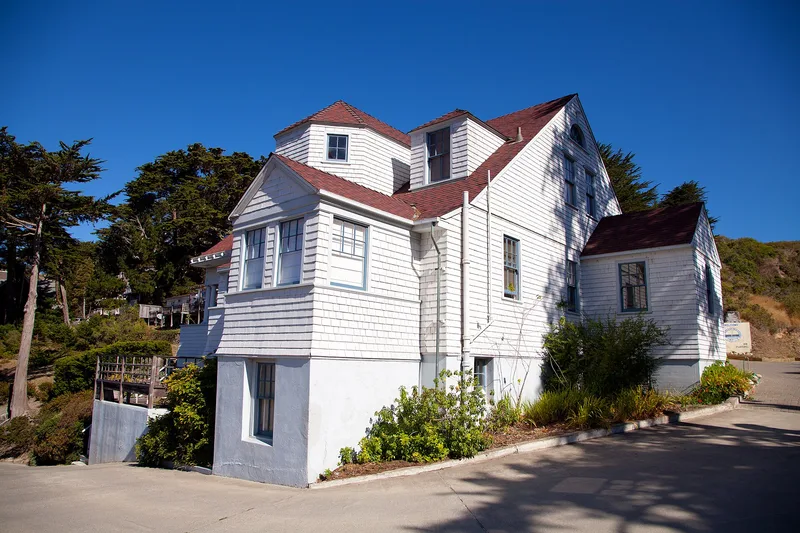
Arena Cove Historic District occupies about 20 acres around a small harbor on the Pacific coast at Point Arena. It holds thirteen resources, all contributing, connected to the cove's shipping trade and its life-saving station. The best-known buildings are the Eastlake-style Wharfmaster's House, probably built in the mid-1870s on a rise where the wharfmaster could watch the port, and the Neo-Classical Captain's House, completed in December 1902 with a central tower. Shingle-sided station buildings include a boathouse, garage, auxiliary building, sheds, water tanks, a flagpole and a concrete staircase. A corrugated shed and a small board-and-batten house reflect the working port. From the 1860s, lumber and dairy products left the cove for San Francisco, while passengers and goods arrived. The life-saving station, opened in 1903, later became a Coast Guard post. The listing recognizes this commerce and maritime history between 1875 and 1933.
Machine-generated summary. This summary was generated by a language model from the official nomination document and has not been reviewed line by line by an editor. It may contain errors. Check the source document before relying on any detail. Source: nomination document (PDF) · catalog entry. Generated October 2026 (model claude-sonnet-5-5, prompt v1.0-2026-10-29).
| Period of significance | 1875 - 1933 |
|---|---|
| Styles | Late Nineteenth and 20th Century Revivals; Stick/Eastlake; No Style |
| Areas of significance | Commerce, Maritime History |
| Acreage | 20 |
| Boundary source | NPS cultural-resource GIS polygon |
| Full listing page | Arena Cove Historic District (property record) |
What listing means for this property
This is a historic district. Buildings within its boundary are either contributing (they add to the district's significance) or non-contributing. Owners of contributing income-producing buildings can claim the 20% federal rehabilitation tax credit; homeowners should look at state credits. National Register districts impose no design review by themselves; a local historic district ordinance, if one exists, does (the difference explained).
General information, not legal or tax advice. Rules change; confirm with your State Historic Preservation Office or a qualified adviser.