Alvarado Park

Why it's listed
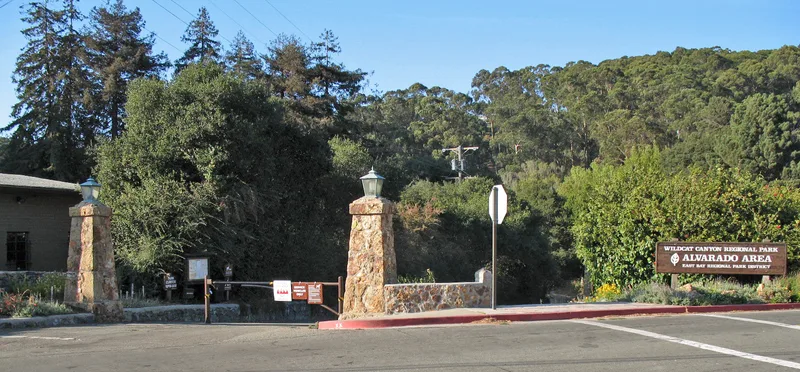
Alvarado Park is a 42-acre public park in Richmond, California, set in the canyon of Wildcat Creek. Bernard Shapiro began it in 1909 as Grand Canyon Park to promote his nearby real estate subdivision, and the City of Richmond took it over in 1923. Most of what visitors see today dates to 1934-1939, when state and federal work relief programs paid unemployed local craftsmen to build it. Working from plans by City Engineer Edward Hoffman, crews built a single-arch stone bridge, stone light poles, thousands of feet of stone and concrete walls, barbecue stoves and six creekside picnic sites. Additional stacked-concrete walls and barbecue areas were added in 1943. The park is notable because work of this kind is usually associated with rural Civilian Conservation Corps projects in state and national parks, while here it appears in a city setting. Its layout and Depression-era features remain well preserved.
Machine-generated summary. This summary was generated by a language model from the official nomination document and has not been reviewed line by line by an editor. It may contain errors. Check the source document before relying on any detail. Source: nomination document (PDF) · catalog entry. Generated October 2026 (model claude-sonnet-5-5, prompt v1.0-2026-10-29).
| Period of significance | 1909-1943 |
|---|---|
| Styles | NPS-type Rustic Architecture |
| Areas of significance | Landscape Architecture, Entertainment/Recreation, Social History |
| Acreage | 42.5 |
| Boundary source | NPS cultural-resource GIS polygon |
| Full listing page | Alvarado Park (property record) |
What listing means for this property
This is a historic district. Buildings within its boundary are either contributing (they add to the district's significance) or non-contributing. Owners of contributing income-producing buildings can claim the 20% federal rehabilitation tax credit; homeowners should look at state credits. National Register districts impose no design review by themselves; a local historic district ordinance, if one exists, does (the difference explained).
General information, not legal or tax advice. Rules change; confirm with your State Historic Preservation Office or a qualified adviser.