Alkali Flat West Historic District

The National Park Service has not published a boundary polygon for this district; the map shows the listed properties inside it and the district's reference point.
Why it's listed
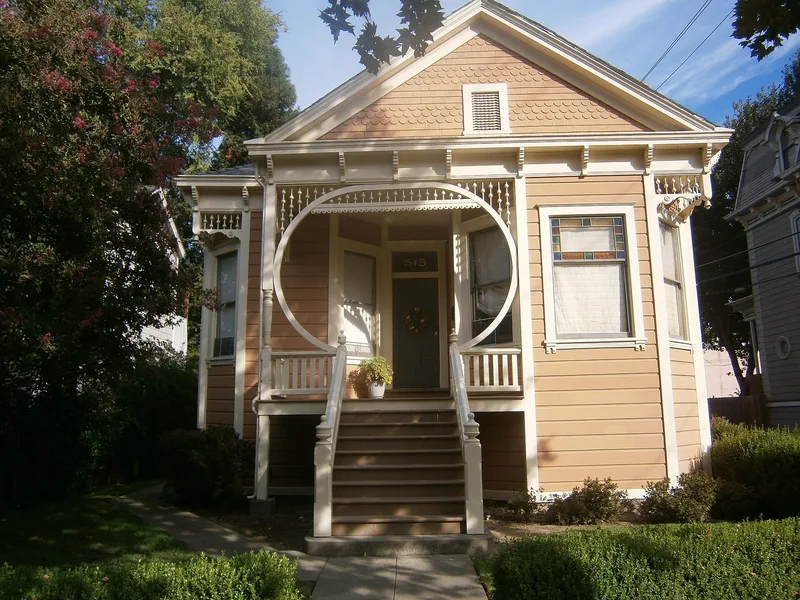
This small Sacramento district sits on two blocks around 8th Street between E and F Streets, in Alkali Flat, one of the city's oldest neighborhoods. Its 21 buildings include rows of small Queen Anne/Eastlake cottages built in the 1890s, a rare Second Empire house from 1894, an 1872 Italianate residence, an 1881 double house, and Craftsman and Colonial Revival apartment buildings from the early 1900s. Much of the housing grew from speculation by owners such as the Meister brothers and Mary Mesick, who divided large parcels for tenants, many tied to Southern Pacific employment. Some owners lived elsewhere, reflecting growing absentee landlordism. The district is described as a working class neighborhood that kept its small wood frame houses and large street trees while redevelopment fragmented the surrounding area. Eighteen buildings contribute to its character, and five lots are vacant. It was listed as a remnant of Sacramento's early development and settlement patterns.
Machine-generated summary. This summary was generated by a language model from the official nomination document and has not been reviewed line by line by an editor. It may contain errors. Check the source document before relying on any detail. Source: nomination document (PDF) · catalog entry. Generated October 2026 (model claude-sonnet-5-5, prompt v1.0-2026-10-29).
| Period of significance | ca. 1860 to 1914 |
|---|---|
| Styles | Queen Anne/Eastlake row cottages, Second Empire, Italianate, Colonial Revival and Craftsman |
| Areas of significance | Architecture, Social History |
| Acreage | 6.7 |
| Boundary source | not published |
| Full listing page | Alkali Flat West Historic District (property record) |
What listing means for this property
This is a historic district. Buildings within its boundary are either contributing (they add to the district's significance) or non-contributing. Owners of contributing income-producing buildings can claim the 20% federal rehabilitation tax credit; homeowners should look at state credits. National Register districts impose no design review by themselves; a local historic district ordinance, if one exists, does (the difference explained).
General information, not legal or tax advice. Rules change; confirm with your State Historic Preservation Office or a qualified adviser.