Aetna Springs Resort

Why it's listed
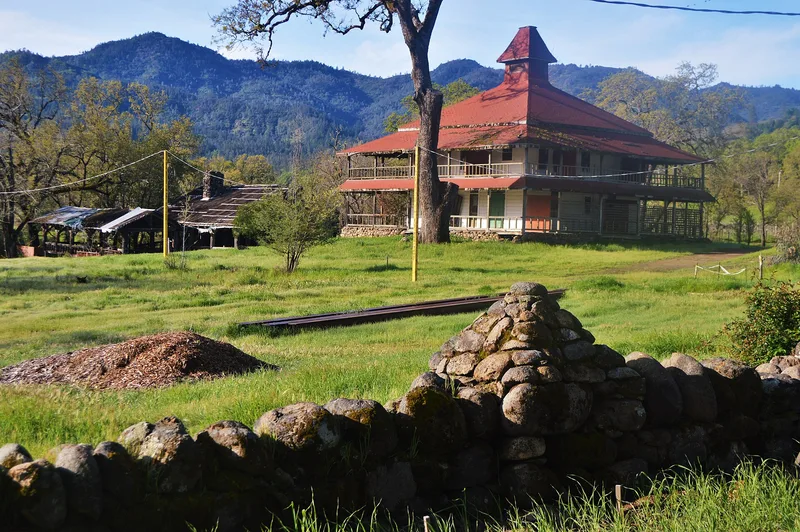
Aetna Springs Resort occupies 672 wooded acres in Pope Valley, Napa County, where a mineral springs resort grew from the 1870s into the early 1930s. A compact core holds 32 buildings, including the dining hall, social hall, soda fountain building, the original lodge called Winship, and many guest cottages. Stone walls, two stone and timber bridges, a pergola and a mineral bath pavilion add to the setting. Cobblestone foundations, wood shingles, latticed porches and exposed timber give the buildings a consistent rustic look, strengthened by remodeling in the early 1930s by Albert Farr and J. Frances Ward. The dining and social halls resemble the work of Bernard Maybeck, though the dining hall attribution is undocumented. The resort operated until the 1970s and was later vacant, with some cottage interiors stripped. It was listed as one of California's finest surviving mineral springs resorts and an example of the First Bay Tradition of Arts and Crafts design.
Machine-generated summary. This summary was generated by a language model from the official nomination document and has not been reviewed line by line by an editor. It may contain errors. Check the source document before relying on any detail. Source: nomination document (PDF) · catalog entry. Generated October 2026 (model claude-sonnet-5-5, prompt v1.0-2026-10-29).
| Period of significance | 1877-1935 |
|---|---|
| Styles | Rustic, with First Bay Tradition / Arts and Crafts character |
| Areas of significance | Entertainment/Recreation, Architecture |
| Acreage | 672 |
| Boundary source | NPS cultural-resource GIS polygon |
| Full listing page | Aetna Springs Resort (property record) |
What listing means for this property
This is a historic district. Buildings within its boundary are either contributing (they add to the district's significance) or non-contributing. Owners of contributing income-producing buildings can claim the 20% federal rehabilitation tax credit; homeowners should look at state credits. National Register districts impose no design review by themselves; a local historic district ordinance, if one exists, does (the difference explained).
Noted as vacant in the nomination. Nomination documents can be decades old; current status may differ. If you are considering buying an empty listed property, read the due-diligence checklist.
General information, not legal or tax advice. Rules change; confirm with your State Historic Preservation Office or a qualified adviser.