Alcatraz
Also known as: Alcatraz Island National Historic Landmark; Pacific Branch, U

Why it's listed
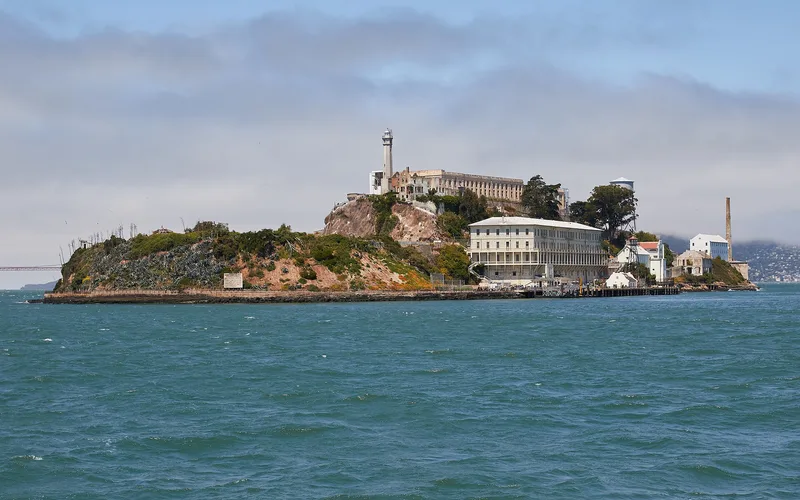
Alcatraz is a rocky island in San Francisco Bay, about a half mile long and 140 feet high. Acquired by the United States in 1848, it was fortified from 1853 with batteries, casemates, a sally port and a brick Citadel protected by a dry moat. The Citadel was designed to be defended entirely by rifle fire. The fortress never fired a shot in anger, but it served as a deterrent during the Civil War. Its remote setting and cold, swift waters also made it a natural prison. It became a military prison, was formally designated one in 1907, and from 1934 to 1963 was a maximum-security federal penitentiary for the most unmanageable convicts, including Robert Stroud and Al Capone. The 1969 to 1971 Indian occupation left several buildings burned and others vandalized. Salt air has since caused serious decay. Since 1972 the island has been part of Golden Gate National Recreation Area, open for tours.
Significance in brief: The nomination argues for national significance in military history and social history (penology). In the mid-19th century the island was a fortress guarding the entrance to the Bay and had a brick Citadel designed for defense by rifle fire alone. It later became a military prison and then one of America's most famous federal penitentiaries, holding convicts considered too unmanageable for other prisons.
Machine-generated summary. This summary was generated by a language model from the official nomination document and has not been reviewed line by line by an editor. It may contain errors. Check the source document before relying on any detail. Source: nomination document (PDF) · National Archives catalog entry. NRHP reference 76000209, listed June 23, 1976. Summary generated October 2026 (model claude-sonnet-5-5, prompt v1.0-2026-10-29, confidence high).
Key facts
| Address | Alcatraz Island, San Francisco Bay, San Francisco |
|---|---|
| County | San Francisco |
| Listed | June 23, 1976 |
| Reference number | 76000209 |
| Resource type | District |
| Period of significance | 1853-1971 |
| Architect / builder | U.S. Army, U.S. Bureau of Prisons |
| Areas of significance | Commerce, Military, Engineering, Social History |
| Level of significance | National |
| National Historic Landmark | Yes, designated January 17, 1986 |
| Status (as stated in the nomination) | Altered and largely deteriorated; the prison closed in 1963, buildings were burned and vandalized during the 1969-1971 Indian occupation, and the island has been part of Golden Gate National Recreation Area with public tours since 1972. |
| Acreage | 47 |
| Coordinates | 37.82684, -122.42310 (NPS GIS) |
What listing means for this property
This is a historic district. Buildings within its boundary are either contributing (they add to the district's significance) or non-contributing. Owners of contributing income-producing buildings can claim the 20% federal rehabilitation tax credit; homeowners should look at state credits. National Register districts impose no design review by themselves; a local historic district ordinance, if one exists, does (the difference explained).
General information, not legal or tax advice. Rules change; confirm with your State Historic Preservation Office or a qualified adviser.
Sources and further reading
- National Park Service, National Register of Historic Places database (snapshot May 2026), reference 76000209.
- Nomination form (PDF, National Archives) — catalog entry
- Wikipedia article (used for cross-checking only; text not reproduced here)
- Wikidata Q131354
- This listing as JSON
Last updated October 2026. Found an error? See the editorial policy for how to report it.