Hercules Village

Why it's listed
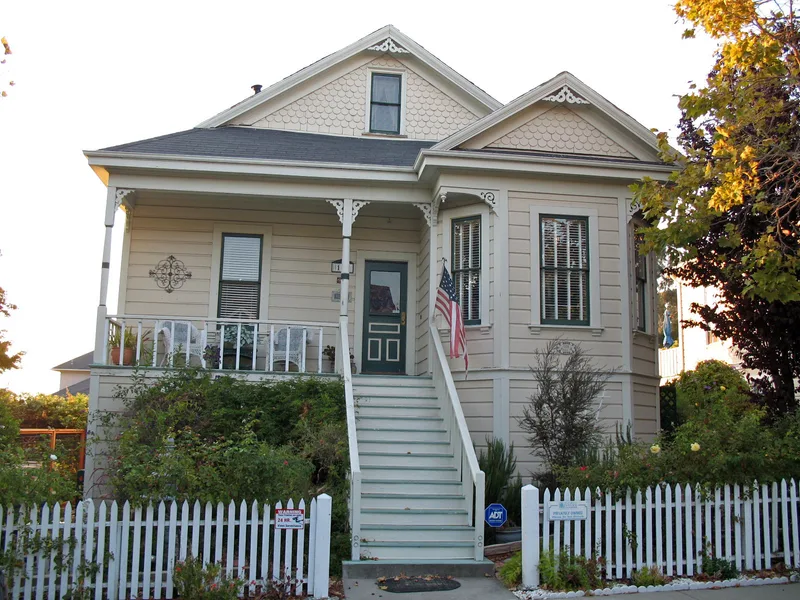
Hercules Village is the surviving core of a company town built beside an explosives plant on San Pablo Bay in Contra Costa County. Thirty-six buildings remain, including the Classic Revival main office and laboratory, the 1897 clubhouse, the former guard house and office annex, Queen Anne cottages, many two-story pattern book houses, bungalows, a Masonic lodge and a wharf built in 1902. The village grew from the California Powder Works, which moved here from safer-distance concerns after earlier explosions. Hercules became the world's largest dynamite producer and a major TNT producer in World War I. Housing, a hospital, a club and recreation facilities served employees, and the city incorporated in 1900. The nomination calls it one of California's last company towns and the only remnant of the region's earlier explosives communities. Many homes now stand vacant, and some have been demolished ahead of planned redevelopment.
Significance in brief: The nomination argues the district is one of the last remaining company towns in California and cannot be separated from the American explosives industry. It preserves the housing, social and administrative buildings of a village that supported what became the world's largest dynamite producer. It is also the only surviving town of the region's earlier explosive manufacturers.
Machine-generated summary. This summary was generated by a language model from the official nomination document and has not been reviewed line by line by an editor. It may contain errors. Check the source document before relying on any detail. Source: nomination document (PDF) · National Archives catalog entry. NRHP reference 80000799, listed August 22, 1980. Summary generated October 2026 (model claude-sonnet-5-5, prompt v1.0-2026-10-29, confidence medium).
Key facts
| Address | Kings, Railroad, Santa Fe and Hercules Aves., Talley Way, Bay and Pinole Sts., Hercules |
|---|---|
| County | Contra Costa County |
| Listed | August 22, 1980 |
| Reference number | 80000799 |
| Resource type | District |
| Architectural style | Queen Anne cottages, "pattern book" wood frame houses, bungalows, and Classic Revival office and laboratory buildings |
| Areas of significance | Industry |
| Level of significance | State |
| Status (as stated in the nomination) | Condition is marked deteriorated and fair. Most residential buildings are vacant, vandalized and scheduled for possible demolition. The company buildings on the hill are intact and in use, and the social and utilitarian buildings are vacant but available for re-use. |
| Acreage | 34.4 |
| Coordinates | 38.01805, -122.29062 (NPS GIS) |
What listing means for this property
This is a historic district. Buildings within its boundary are either contributing (they add to the district's significance) or non-contributing. Owners of contributing income-producing buildings can claim the 20% federal rehabilitation tax credit; homeowners should look at state credits. National Register districts impose no design review by themselves; a local historic district ordinance, if one exists, does (the difference explained).
Noted as vacant in the nomination. Nomination documents can be decades old; current status may differ. If you are considering buying an empty listed property, read the due-diligence checklist.
General information, not legal or tax advice. Rules change; confirm with your State Historic Preservation Office or a qualified adviser.
Sources and further reading
- National Park Service, National Register of Historic Places database (snapshot May 2026), reference 80000799.
- Nomination form (PDF, National Archives) — catalog entry
- Wikidata Q141632198
- This listing as JSON
Last updated October 2026. Found an error? See the editorial policy for how to report it.